VISION
Acceleration and Pace
Milestones and Vision
Three roads. One choice, today.
Results
Admissions
A new Bharat education system
A name brings them to the door. What happens next is the system.
The Seat–Score Paradox
01Chase seats
Fill the batch fast
02Students not ready
Parent-dependent, unstable, confused
03No scores
No selections to show
04Serious ones go elsewhere
Those who research, decide and evaluate don't pick us yet
No seats, no scores. No scores, no seats. And the loop starts again.
If we chase admissionsWe get students who aren't readyParent-dependent · unstable · confusedNo results
If we chase resultsThe serious student researches firstResearches · decides · evaluatesWon't pick a new institute yet
One system. All three at once.
Results
Admissions
New Bharat system
One Yuktiira system
The choice is made today. The system makes it all three.
A name brings them in. Only a system keeps them.
Interestthey hear the name, watch a video, follow a page
Enquirythey register, call or visit
Classroomthey join, and stay two years
From discovery to community
Risk zone
Discovery01
Trust02
Participation03
Practical value04
Community05
Six places a registered student slips away
01Low-intent registrations
Many signed up in the buzz of the launch, without a plan to move.
02Slow or no follow-up
Interest goes cold in 24–48 hours when nobody calls.
03No trained counselling
No one to answer on fees, faculty, how often senior faculty teach, or hostel life.
04Trust
A new academy, no results yet, and a two-year move away from home.
05Affordability
No EMI, no scholarship test, no early-bird offer.
06Offer fit
Residential only: students who cannot relocate have nothing to buy.
Hypotheses, to be confirmed with our own data in the first 30 days.
In the first 30 days, we call every enquiry and learn exactly why they did not join.
Every institute sells the 0.2%. No one cares for the 99.8%.
5.77 lakhsat the UPSC Prelims in 2025
979posts on offer
≈ 0.2%were ever going to be selected
Almost everyone who prepares for UPSC is not selected, and every coaching institute advertises only the few who are. The biggest fear of students and parents is simple: "What if I give three or four years and get nothing?" Yuktiira can be the first academy with an honest answer.
01The state PSC safety net
The same preparation covers the state civil services exams, which put about 3× as many students in the exam hall and have many more posts. State civil services in detail →
02Career pathways, through BriefUp
For those who do not clear: skills, certifications and career guidance, so the years of preparation become a qualification, not a gap.
No student who comes to Yuktiira will leave empty-handed.
UPSC Civil Services 2025: 5,76,793 appeared in the Prelims (UPSC, via PIB); 979 posts notified. 979 ÷ 5,76,793 ≈ 0.17%.
What students hate about residential coaching, and the opening it leaves
The 12 biggest problems students discuss
Students complain about completing lectures, collecting new notes and taking regular tests without enough time to consolidate what they have learned. The frustration is particularly pronounced among repeat aspirants who have already completed foundation courses.
What students wantFewer unnecessary classes, dedicated revision time, personalised weak-area improvement and targeted testing.
Students distinguish between having a mentor assigned to them and receiving genuinely useful guidance. Generic study plans, motivational conversations and occasional group sessions are often seen as inadequate.
What students wantMentors who know their academic weaknesses, follow up consistently, review their progress and change the strategy when required.
Students discuss differences between promotional images and actual living conditions. Complaints include cramped rooms, inconsistent cleaning, inadequate washing machines, poor ventilation and maintenance delays.
What students wantA clean, functional and comfortable room, without unnecessary luxury.
Mess food is a repeated complaint in residential discussions. Students are concerned about monotonous menus, inadequate protein, poor taste, hygiene and having to purchase additional food.
What students wantFresh, nutritious, affordable meals with variety and reliable quality.
A structured daily schedule is attractive, but some students criticise rigid entry timings, changing hostel rules and restrictions that interfere with reasonable personal activities.
What students wantAcademic discipline combined with freedom, privacy and respectful treatment.
Students question whether residential programmes deliver an advantage over ordinary coaching with separately arranged accommodation. Additional complaints involve mess charges, laundry, electricity, deposits, transport, printing and other incidental costs.
What students wantTransparent all-inclusive pricing, predictable expenses and fair refund policies.
Some students question how institutes advertise successful candidates and whether those students actually completed the advertised programmes. Students also debate whether residential academies select already strong candidates, making outcomes difficult to attribute to the programme itself.
What students wantClear results showing enrolment numbers, preparation stage, programme participation and actual examination outcomes.
Students appreciate studying alongside dedicated aspirants. They discuss motivation from competitive peers, answer-writing discussions and regular academic interaction. However, they also worry about unproductive socialising, gossip and comparison-driven stress.
What students wantA community built around study, not merely a hostel filled with UPSC aspirants.
Another frustration involves difficulty getting straightforward answers about fees, timetables, faculty availability, room maintenance or other complaints.
What students wantA responsible person who listens, communicates clearly and resolves problems within a reasonable period.
Some residential programme reviews raise concerns that regular MCQ testing and Prelims preparation dominate the academic schedule. Students who are preparing for Mains want more time for Optional subjects, answer writing, Essay and Ethics.
What students wantDifferent academic pathways for beginners, repeat aspirants, Prelims-qualified students and Mains-focused candidates.
Aspirants frequently discuss isolation, lack of friendships, declining motivation, family expectations and uncertainty after unsuccessful attempts. There is also concern about residential programmes where the only acceptable activity appears to be studying.
What students wantHuman connection, recreation, exercise, opportunities to speak openly and an environment that supports long-term consistency.
Discussions about moving to coaching hubs include personal safety, pollution, emergency healthcare, fire safety, flooding, drinking water, electrical backup and hostel security. Female aspirants also raise concerns about balancing safety rules with independence and privacy.
What students wantSafe accommodation, functioning facilities, reliable emergency arrangements and respectful policies.
The opportunity for a new residential UPSC academy
The discussions suggest six particularly worthwhile opportunities for an institution designing its programme from scratch.
| Opportunity | What would distinguish the academy | How Yuktiira delivers it |
|---|---|---|
| 1Academic accountability | Topic-level progress, recall testing, individual feedback and meaningful mentor interventions | The AI tutor tracks every topic; a named mentor reviews it weekly and changes the plan |
| 2Revision-first preparation | Protecting independent study hours instead of filling every day with lectures | Lectures on the projector when needed; the timetable protects self-study and revision hours |
| 3Transparent student outcomes | Publicly explaining what was promised, delivered and achieved | Results published with enrolment, stage of preparation and programme completed |
| 4Excellent basic living conditions | Treating hygiene, laundry, food and maintenance as core academic infrastructure | The Yuktiira campus at Bahadurgarh: fresh meals, clean rooms, laundry and upkeep built in |
| 5Student-centred discipline | Clear rules, fair enforcement, reasonable personal freedom and responsive administration | Yoga and a daily rhythm by choice, clear written rules and one person answerable for each concern |
| 6Financial accessibility | Predictable fees, low incidental costs and scholarships where feasible | One all-inclusive fee, the ₹2,000 app for those who stay home, and scholarships from the school clubs |
What students appear to value most
Based on the themes rather than a statistical ranking.
01Personal academic attention
A mentor who knows what each student needs
02Serious study environment
Quiet spaces and a committed peer group
03Consistent daily execution
Revision, practice and visible progress
04Affordable residential living
Transparent costs and reasonable facilities
05Dignity and basic comfort
Clean rooms, bathrooms, nutritious food and privacy
06Trustworthy management
Promises that match actual delivery
22 residential UPSC programmes, and what their students say
Residential UPSC coaching is small and scattered: private campuses, charitable trusts, universities and a few government centres. Most sit around Delhi. Yuktiira's Bahadurgarh campus sits on Delhi's doorstep, without Delhi's problems.
North India, close up · 12 of the 22 programmes
Private UPSC residential coaching institutes5
- 1ForumIAS — Tapasya CampusAlwar, Rajasthan
- 2Tathastu ICS — GurukulGreater Noida, Uttar Pradesh
- 3Drishti IAS — AsmitaNoida, Uttar Pradesh
- 4UnderStand UPSC — GurukulDehradun, Uttarakhand
- 5UnderStand UPSC — TakshilaDehradun, Uttarakhand
Non-profit, trust and charitable residential academies8
- 6Hamdard Study CircleNew Delhi
- 7MS IAS AcademyHyderabad, Telangana
- 8Atiya Residential Coaching AcademyKarol Bagh, New Delhi
- 9SIYS UPSC/GPSC AcademySurat, Gujarat
- 10Bharathi Payilagam IAS AcademyTamil Nadu
- 11Ma'din MAGICS Civil Services AcademyMalappuram, Kerala
- 12ILM Welfare Society — Residential UPSC/MPSC ProgrammePune, Maharashtra
- 13SAFI IAS Academy — SankalpKozhikode, Kerala
University-based residential coaching academies5
- 14Jamia Millia Islamia — Residential Coaching AcademyNew Delhi
- 15Aligarh Muslim University — Residential Coaching AcademyAligarh, Uttar Pradesh
- 16Maulana Azad National Urdu University — Civil Services RCAHyderabad, Telangana
- 17Jamia Hamdard — Residential Coaching AcademyNew Delhi
- 18Babasaheb Bhimrao Ambedkar University — Residential Coaching AcademyLucknow, Uttar Pradesh
Government-supported residential UPSC coaching centres2
- 19All India Civil Services Coaching CentreChennai, Tamil Nadu
- 20Haj House Residential Coaching InstituteMumbai, Maharashtra
Upcoming or developing residential UPSC programmes2
- 21NEXT IAS — Kartavyam GurukulSaket, New Delhi
- 22Legacy IAS Academy — Integrated Residential CampusBengaluru, Karnataka
Sources: programme list and student themes from public student discussions and institute pages; locations as listed. Themes are qualitative, not a survey.
Our competitor isn't Drishti or Vajiram. It's Delhi.
Students don't fear one institute. They fear Delhi life: expensive cramped rooms, loneliness, unsafe buildings, bad food, and years lost in Mukherjee Nagar and Old Rajinder Nagar. Yuktiira's real product isn't coaching. It is UPSC without Delhi's problems.
DelhiThe hub students put up with
- Small, costly rooms far from class
- Alone in a crowd, for years
- Basements and buildings that are not safe
- Mess food and money worries
- Nobody answerable for the student
BahadurgarhA hub built for the student
- A full residential campus: rooms, mess, library
- A serious peer group, and mentors who know you
- Yoga, good food and a daily rhythm
- One team answerable for every student
Not an alternative institute. An alternative hub.
BahadurgarhThe residential heart
Partner centresTier 2 and tier 3 cities, zone by zone
School clubsIn every government school
OnlineBriefUp and the Yuktiira app, for every home
Yuktiira doesn't compete with Drishti. Yuktiira competes with Delhi, and Delhi loses every time.
On safety: in July 2024 three aspirants died when the basement library of a coaching centre in Old Rajinder Nagar, Delhi, flooded; in June 2023 students escaped down ropes from a coaching-centre fire in Mukherjee Nagar (national press reports).
Crowded, but no one owns it
Counting only each player's UPSC (IAS) business, the eight biggest names together hold about 15% of the roughly ₹10,000 Cr market. No one has more than about 4%. The rest is spread across thousands of local and online institutes.
Who holds India's UPSC coaching market
1 dot = ₹10 Cr of yearly revenue
1,000 dots × ₹10 Cr
₹10,000 Crthe whole market, every year
The strategy: three moves for one market
The top 3 hold about 9% of the market, the next 5 about 6%, and the other 85% belongs to no one. Yuktiira plays each part differently.
01
Beat the top 3
 Drishti IAS
 PW OnlyIAS
 Vajiram & Ravi≈ 9% together
Don't copy them. Win where they are weakest: aspirants drop off mid-journey, sit as a passive audience, and pay lakhs to live in Delhi rooms.
- An outcome, not a lecture hall. The Bahadurgarh residential model is accountable for each aspirant's daily progress, mind and body.
- A device they can't match. The Yuktiira projector: hologram lectures, an AI tutor, progress and habits in one place.
- Win their drop-outs. Target the repeat and near-miss aspirants (Group D) at the stages of trust, participation and practical value, where they lose them.
- Priced for Bharat. ₹2,000 a month online against fees in lakhs.
MeasureAspirants switching from the top 3, and selections per 1,000 students
02
Keep the next 5 in check, every quarter
 Unacademy UPSC
 Vision IAS
 Next IAS
 StudyIQ
 Sarrthi IAS≈ 6% together
They fight online, on price and on content volume. Stay one step ahead of them all the time, not once.
- Out-teach them for free. Daily YouTube teaching and the 16-category podcast, so aspirants never need their free content.
- A watch room. Track their launches, prices, faculty moves and YouTube growth every month; answer within the quarter.
- Ship every quarter. New device features, tests and live formats on a fixed calendar, so we set the pace.
- Keep the best faculty. Long-term contracts with a share in results, so stars don't walk across.
MeasureOur share of their subscribers, app users and paid students, quarter by quarter
03
Organise the 85%
Thousands of local and online institutes≈ 85%
Don't fight thousands of small institutes. Join them into one network: they keep their classrooms and local trust, Yuktiira gives them the brand, content and system.
- Yuktiira Partner Centres. Local institutes in tier 2 and tier 3 cities sign up, zone by zone, in the Targeting Bharat order.
- One standard everywhere. The same syllabus plan, tests, answer evaluation and live sessions by Yuktiira faculty, run through the projector in each centre.
- Shared revenue. Centres earn on every student they bring to the Yuktiira app and programmes.
- Their students, our community. Every partner's students join the Yuktiira app, podcast and Bahadurgarh programmes.
MeasurePartner centres signed per zone, and students on the Yuktiira app through them
The second market: seven state civil-services exams put ≈3× more students in the exam hall than UPSC.
Current value of each player's UPSC business (2026)
Drishti IAS≈ ₹2,500 CrPhysicsWallah's 2025 offer (₹2,500–3,000 Cr); the deal did not go aheadPW OnlyIAS · UPSC arm of PW≈ ₹3,150 CrImplied: ≈₹315 Cr UPSC revenue at PW's ~10× market value to revenueUnacademy · UPSC≈ ₹500 CrUPSC share of the ₹2,055 Cr upGrad takeover (2026), down from a $3.4 bn peakVajiram & Ravi≈ ₹1,400 CrImplied at ~7× revenue; private LLP, never valuedVision IAS≈ ₹1,350 CrImplied at ~7× revenue; private, never valuedNext IAS · Made Easy≈ ₹730 CrImplied at ~7× revenue (₹104 Cr FY25)StudyIQ · Adda247≈ ₹560 CrImplied at ~7× revenue; Adda247 bought it for ≈ ₹150 Cr in 2021Sarrthi IAS₹250 CrPhysicsWallah bought 40% at this value (Sep 2025); founders Varun Jain, Dr. Shivin ChaudhryUPSC revenue only. Market ≈ ₹10,000 Cr (offline ₹8,000–9,500 Cr + online ₹1,200–1,425 Cr, Redseer); older press estimates are as low as ₹3,000–4,200 Cr, which would make every share about 2.5× larger. Reported: Drishti IAS FY25 (Entrackr), Sarrthi IAS FY25 (Entrackr sources). Estimates: PW OnlyIAS = PW's UPSC vertical (>₹350 Cr FY26 incl. Sarrthi) less Sarrthi; Unacademy UPSC ≈ 25% of its ₹826 Cr FY25 revenue; Vajiram & Ravi from Tracxn's ₹100–500 Cr band and ~12,000 students a year; Vision IAS FY24 and Next IAS FY25 (Tracxn); StudyIQ from Tracxn's ₹50–100 Cr band.
From Indicorn to Unicorn
₹100 CrIndicorn · annual revenue
₹8,000 Cr+Unicorn · the journey
To be the market leader
- Attract the best of talent
- Attract more, and change more
The numbers
₹8,000–9,500 CrOffline market
₹1,200–1,425 CrOnline market
≈ 8.20 lakhAspirant base
₹19,000–21,500 CrAspirants
Online will drive offline. It sets the mood.
Source: Redseer Strategy Consultants
The second market: state civil services
Every state runs its own civil services exam, with the same General Studies at its core. Just seven of them put more students in the exam hall than UPSC does.
17.2 lakhsat the prelims in just these seven state exams
≈ 3×the 5.77 lakh who sat the UPSC prelims in 2025
4,300+posts in six of them, against UPSC's 979
AppliedSat the prelimsUPSC, for scale
UPSCCivil Services 2025
5.77 lakh sat9.38 lakh applied
979posts
RajasthanRAS 2024
3.76 lakh sat6.75 lakh applied
1,096posts
Uttar PradeshPCS 2025
2.66 lakh sat6.26 lakh applied
920posts
BiharBPSC 71st CCE 2025
3.17 lakh sat4.71 lakh applied
1,264posts
TelanganaGroup 1 2024
3.02 lakh sat4.03 lakh hall tickets
563posts
Tamil NaduGroup 1 2025
2.49 lakh satapplied: not published
70posts
MaharashtraRajyaseva 2025
1.75 lakh satapplied: not published
—posts
OdishaOCS 2024
0.35 lakh satapplied: not published
399posts
One foundation serves both markets: the same General Studies, current affairs and answer writing, with each state adding its own history, geography and language paper. A Yuktiira student preparing for UPSC is already most of the way to their state exam, and the state exam is the safety net that keeps them studying with us. Madhya Pradesh, West Bengal, Karnataka, Kerala, Gujarat and the other states are not counted here.
Sources: latest cycle with published numbers for each exam. UPSC 2025: 9,37,876 applied, 5,76,793 appeared (UPSC via PIB). Rajasthan RAS 2024: 6,75,080 applied, 3,75,657 appeared. UP PCS 2025: 6,26,387 registered, about 2.66 lakh appeared in each session; vacancies raised to 920. Bihar 71st CCE 2025: 4.71 lakh applied, 3,16,762 appeared. Telangana Group 1 2024: 4,03,645 hall tickets (about 4.3 lakh applications), 3,02,172 appeared (Deccan Chronicle). Tamil Nadu Group 1 2025: about 2.49 lakh appeared. Maharashtra Rajyaseva 2025: about 1.75 lakh awaiting the prelims result (Physics Wallah), posts not counted. Odisha OCS 2024: 35,165 appeared (OrissaPOST). Applications for Tamil Nadu, Maharashtra and Odisha were not published. Press reports compiled by Careers360, Amar Ujala, Patrika and others.
Aspirants already study on YouTube. That is where Yuktiira must teach.
For a UPSC aspirant, YouTube is not entertainment. It is the free classroom: daily current affairs, full lectures, toppers' strategy, answer reviews. Every big institute built its audience there first, by teaching for free, not by advertising. A new academy earns its audience the same way.
49 croreIndians on YouTube, its largest audience in the worldDataReportal, from Google's ad tools, Jan 2025
93%of Indian viewers use YouTube to gather information or expand their knowledgeYouTube India Impact Report 2025 (Oxford Economics, Ipsos survey)
3–4 hrsa day on YouTube for UPSC preparation, for about half of the aspirants surveyedJMSR study of UPSC aspirants aged 18–32 (small sample, ~100)
Who UPSC aspirants learn from on YouTube
Subscribers on each institute's main UPSC channel
Source: YouTube channel pages, read on 3 Nov 2026Main channel only; Hindi, English and state channels not added
Videos published
The big channels teach every day
How Yuktiira will use YouTube: teach, don't advertise
01Free teaching, every day
Daily current affairs and full lectures by Yuktiira faculty, on a fixed schedule. Aspirants come back for the teaching, not for promotions.
02Teachers with a following
Regular sessions with well-known guest teachers bring their audiences to the academy.
03A playlist for each of the 16 categories
From the dreamers to repeat aspirants, each category finds its own series. The podcast lives here too.
04Live and participatory
Weekly answer-writing reviews, mock-interview panels and Q&A, where aspirants take part, not just watch.
05Hindi first, for Bharat
Hindi and regional-language teaching for the tier 2 and tier 3 cities we are targeting.
06YouTube to the app
Free on YouTube; the app at ₹2,000 a month adds the AI tutor, tests, progress and mentors. At 2% of subscribers joining, 1 lakh app users needs about 50 lakh subscribers, still under half of Drishti's.
A great teacher's hour is the scarcest resource
Every institution built around one famous teacher meets the same limit: his time. He can be in one classroom at a time. The system we build makes one hour of his reach lakhs of students, without taking a minute more of his time.
1 hourof a great teacher
The projectorRecorded once as a hologram lecture, taught for years
BriefUpTurned into animated videos and simulations
Podcast & YouTubeCut into clips for each of the 16 kinds of aspirant
School clubsScreened together in thousands of government schools
Partner centresPlayed in every tier 2 and tier 3 centre
InternationalDubbed and subtitled for aspirants abroad
1 lakh+students, everywhere at once
One hour of his reaches one classroom today. The system makes it reach a lakh students. Here is how it looks.
Press the power button



Drag to turn the model
3D Models
See it happenLectures
Choose a subjectProgress
Sample student · this weekStudy streak
12 days
Syllabus covered
46%
GS I–IV · Prelims + Mains
Mock tests
8 taken
Average 112 / 200
Answer writing
34 answers
This month · 6 reviewed by mentors
Current affairs
21 / 30 days
-
Do Yoga DailyEvery day · 6:00 AM · 20 minDue
-
Pranayama · KapalbhatiEvery day · 6:25 AM · 10 minDue
-
Read the newspaperEvery day · 7:00 AMDone
-
Revise yesterday's notesEvery day · 30 minDone
-
Sleep by 11 PMEvery nightDone
Message · Mentor desk
Today's answer-writing task
Write 150 words: why was the Champaran Satyagraha a turning point for the national movement?
Use the Tinkathia system and the Champaran Agrarian Act (1918) as your examples.
Press the power button to switch the projector on
Any concept, as a simulation you watch from start to finish
BriefUp turns the hardest ideas in each subject into cause-and-effect simulations. Press start and the whole system plays out in one frame: who acts, what moves where, and which article of the Constitution makes it happen. Here is one, for Indian Polity and Economy.
The Union Budget, step by step
How India earns, decides and spends
Follow one rupee from the taxpayer to the Consolidated Fund, through Parliament, out to schools, roads and hospitals, and into the audit. Three ways in: a guided journey in 39 steps, a sandbox where you build your own Budget, and a session of Parliament you run yourself.Figures: Union Budget 2026-27 (Budget Estimates)
The Union Budget, from the first estimate to the audit
Each step first tells you what happens. Then the frame shows where it happens and who is involved, in colour; what you have already seen stays in grey, so the whole picture builds up as you go.
Your simulated Budget · fictional units, not India’s Budget · start: 70 units of receipts + 30 borrowed = 100
Money in
Money out
ReceiptsBorrowingRevenue spendingCapital spendingGap
What your changes mean
Official Budget Estimates 2026-27, for comparison and kept separate: fiscal deficit ₹16.96 lakh crore, 4.3% of GDP; interest ₹14.04 lakh crore; capital expenditure ₹12.22 lakh crore.
A fictional session: the ministry, the figures and the lines spoken are illustrations. The procedure and the articles are real.
Parliament dashboard
Side by side: BriefUp, ChatGPT and the big institutes
Three phones, live. BriefUp runs right here inside its phone: tap it, scroll it, sign in. Everything stays inside the phones; nothing opens a new window. Click a phone’s frame to bring it to the front.
ChatGPT ›
Tell me about the bombing of Calcutta
The bombing of Calcutta was a series of Japanese air raids on Calcutta (now Kolkata), the former capital of British India, during the Second World War.
- Why: to destroy Calcutta port, a key Allied base on the Bay of Bengal, and delay the counter-offensive in Burma.
- First raids, 20–24 December 1942: night raids by the Imperial Japanese Army Air Force, mostly on the industrial area; about 3.5 lakh people were displaced. Chittagong’s airfields were hit first to draw Allied fighters away.
- 1943: radar-guided RAF night fighters, and from August Spitfires, made the raids costly.
- 5 December 1943: a daylight raid on the Kidderpore docks killed hundreds and destroyed ships and warehouses.
- End: sporadic raids went on into 1944, until Japan needed the aircraft on other fronts.
The raids hurt the city but failed to cut Allied supply lines. Want the wider Burma campaign context?
Ask anything
Get them to the magic moment, and they stay
Uber's growth team called it the magic moment: the point where a rider feels the value and stops shopping around. Once someone has taken a couple of rides, they rarely go back to waiting for a taxi. Every product that grew fast found its own version of that moment, and built everything to get new users there quickly. The Yuktiira app is built the same way.
Every great product has a magic number
UberA couple of rides
The magic moment: the value is felt, the habit forms.
Facebook7 friends in 10 days
New users who reached it kept coming back.
Slack2,000 messages
Teams past this point almost never left.
Dropbox1 file, 1 folder, 1 device
One synced file and the product clicks.
YuktiiraA 7-day streak + 1 live class in the first 14 days
Our target, to be tested on the first 10,000 students.
Two kinds of new student
Illustration of the curve we design for: the share of a starting group still studying, week by week over 24 weeks. We will measure the real one on the first 10,000 students.
The daily loop that builds the habit
01 · Cue6 AM, the projector glows
Orange light and a soft chime: time for yoga.
02 · Do20 minutes
Yoga, then the day's lesson as a hologram.
03 · RewardStreak + 1
The progress ring fills; a note from your mentor on day 7.
04 · InvestIt learns them
Notes, doubts and test results: the AI tutor knows their weak topics.
A habit, not an appEvery day the loop runs, leaving gets harder.
What a student would lose by leaving
Day 1
Nothing yet
Week 2
A 14-day streak · their notes
Month 3
+ an AI tutor that knows their weak topics · their school club role
Month 6
+ a mentor · their all-India rank · friends in the 16-category community
Sources: Andrew Chen, who led rider growth at Uber, on the "magic moment" (Flurry interview); Uber reports that riders who use more than one of its services retain over 35% better (eMarketer, Barchart). The Facebook, Slack and Dropbox numbers are widely reported by those companies' founders and growth teams. The Yuktiira magic number and the curves are targets and illustrations, not results.
The 16 UPSC audience categories
One clear voice, reaching all 16 kinds of aspirant.
A
Group A — The Dreamers & Decision-Makers
Audience acquisitionPeople who are entering, considering or imagining the UPSC journey. Content should build informed aspiration and curiosity.
01
The Dreamers
IAS lifestyle, inspiration, service, identity and ambition
Podcast episodeWhat nobody tells you about becoming an IAS officer
02
The Undecided
Whether UPSC is worth the risk, opportunity cost and effort
Podcast episodeShould you really prepare for UPSC?
03
College Aspirants
Starting early without sacrificing college life or career options
Podcast episodeUPSC preparation while in college: what actually matters?
04
Working Aspirants
Time constraints, job security and balancing preparation with employment
Podcast episodeA full-time job and UPSC: can both survive?
B
Group B — The Everyday Fighters
Students already preparing, often trying to establish a workable system. Content should offer guidance, practical improvement and belonging.
05
The Beginners
Sources, routines, mistakes, uncertainty about where to start
Podcast episodeYour first 100 days of UPSC preparation
06
Self-Study Aspirants
Independence, finding guidance, measuring progress
Podcast episodeCan self-study compete with expensive coaching?
07
Coaching Students
Backlogs, lecture overload, retaining what they learn
Podcast episodeYou've attended 500 lectures. How much do you actually remember?
08
Resource-Constrained Aspirants
Affordable preparation, regional-language resources, limited guidance
Podcast episodePreparing for UPSC without spending lakhs
C
Group C — The Serious Competitors
Students actively trying to improve exam performance. Content must deliver genuine academic value and expertise.
09
Prelims-Focused Aspirants
Test scores, accuracy, elimination techniques, revision
Podcast episodeWhy your Prelims mock scores aren't improving
10
Mains-Focused Aspirants
Answer quality, thinking, structure, speed, originality
Podcast episodeWhy two students write the same facts but score differently
11
Optional & Essay Strategists
Subject selection, conceptual depth, essay thinking
Podcast episodeWhat makes an average essay exceptional?
12
Interview Candidates
Judgement, communication, personality, decision-making
Podcast episodeInside the mind of a UPSC interview board
D
Group D — The Comeback & Crossroads Audience
Students navigating repeated attempts, setbacks, isolation or important career decisions. Content should be empathetic, realistic and constructive.
13
Repeat Aspirants
Why previous strategies failed and what genuinely needs changing
Podcast episodeYour third attempt cannot be a copy of your first
14
Near-Miss Aspirants
Missing cut-offs, Mains setbacks, improving specific weaknesses
Podcast episodeWhat changes after missing selection by a few marks?
15
Isolated or Exhausted Aspirants
Loneliness, consistency, comparison, expectations
Podcast episodeThe loneliness of preparing for UPSC
16
Career Crossroads Aspirants
Financial stability, alternative careers, identity beyond selection
Podcast episodeWhat if UPSC doesn't work out?
The deeper segmentation that can make podcasts powerful
Beyond these 16 groups, we need to understand the student's relationship with preparation.
What makes them return?
01Ambition
I want to achieve something meaningful
02Clarity
I need to know what to do next
03Belonging
I want to hear from people like me
04Improvement
I want evidence that I'm progressing
05Perspective
I want honest answers, not false promises
06Resilience
I want to find a way forward after setbacks
From podcast to participatory conversations
The podcast builds the audience one aspirant category at a time, then grows into conversations the aspirants take part in.
01PodcastOne episode for each of the 16 aspirant categories. Aspirants discover us.
02Listener questionsEpisodes answer the questions aspirants of that category send in.
03Aspirants on airAspirants join episodes and talk through their own preparation.
04Participatory conversationsLive, category-wise conversations: aspirants with each other and with mentors.
| Aspirant group | On the podcast | In conversation |
|---|---|---|
| ADreamers & Decision-Makers | Answers the "should I, and how?" questions | Open Q&A with officers and mentors; brings new aspirants in |
| BEveryday Fighters | Practical routines, sources and fixes | Study-circle check-ins and shared plans |
| CSerious Competitors | Expert deep-dives on Prelims, Mains, Essay and Interview | Answer reviews and mock-interview panels |
| DComeback & Crossroads | Honest stories of setbacks and second attempts | Peer-support circles and career guidance |
The podcast carries aspirants through discovery and trust; the conversations take them through participation and practical value into community.
For residential coaching, the parent is a buyer too
A two-year residential programme is a family decision, and parents usually pay. Not every choice is the parent's and not every choice is the student's: it is a mix of both. So we reach each in their own way, and keep the two in step.
The studentWants to be selected
- Senior faculty on YouTube and the podcast
- BriefUp, free, every day
- The school club and its peers
- Free demo classes and the scholarship test
Kept in step
- The student hears our faculty and signs up
- The family gets a call in their language, the same day
- A parent webinar, then a family campus visit to Bahadurgarh
- One decision, made together
- A monthly progress report to both
The parentWants a safe, worthwhile two years
- Safety, discipline, food and values
- A campus they can visit, an hour from Delhi
- Parent webinars and campus visits for families
- Monthly progress reports, and a safety net if UPSC does not work out
A child goes to Delhi alone. To Bahadurgarh, parents send them with trust.
Institutes dominate the hub. We change the hub.
Offline
Limited to one specific location:
Bahadurgarh
Online
Reaches aspirants all over India:
Tier 2 citiesTier 3 cities
The product that breaks into a crowded market
Every major player sells the same thing: lectures, notes and test series. Aspirants drop off in the middle of the journey — trust, participation and practical value. That is where we are different.
01A learning device, not another app
The Yuktiira projector: lectures as holograms, an AI tutor, progress and daily habits in one place.
02Built for 16 kinds of aspirant
Content and conversations shaped for each category, from dreamers to repeat attempts.
03Participatory, not passive
Podcast to listener questions to live conversations and community.
04Mind and body, not only marks
Yoga, habits and mentorship from the residential model at Bahadurgarh.
05Priced for Bharat
₹2,000 a month online for tier 2 and tier 3 cities, with one residential hub.
Offline vs online
What the residential batch earns, and what the app can
Yuktiira Offline Batch vs the App: Revenue
Yuktiira fee

We are the strategists and the pillars
The team is the key.

The pillarsWe carry the load: teaching, mentoring and standing by every aspirant until the building is complete.
The strategistsWe plan the structure, set the direction and lift every piece into place.
One accountable team for technology, marketing and academics
How we evaluated teachers across subjects
How I am evaluating the teachers
I am treating five factors separately.
| Factor | What it tells us |
|---|---|
| 1Student perception | What students who say they attended the classes experienced |
| 2Discussion visibility | Whether the teacher comes up repeatedly in independent conversations |
| 3Audience reach | Public YouTube subscribers, platform followers and video engagement |
| 4Teaching track record | Documented teaching history, subject expertise and available course materials |
| 5Practical suitability | Clarity, syllabus completion, PYQs, revision workload and value for money |
Subject by subject: ten teachers each
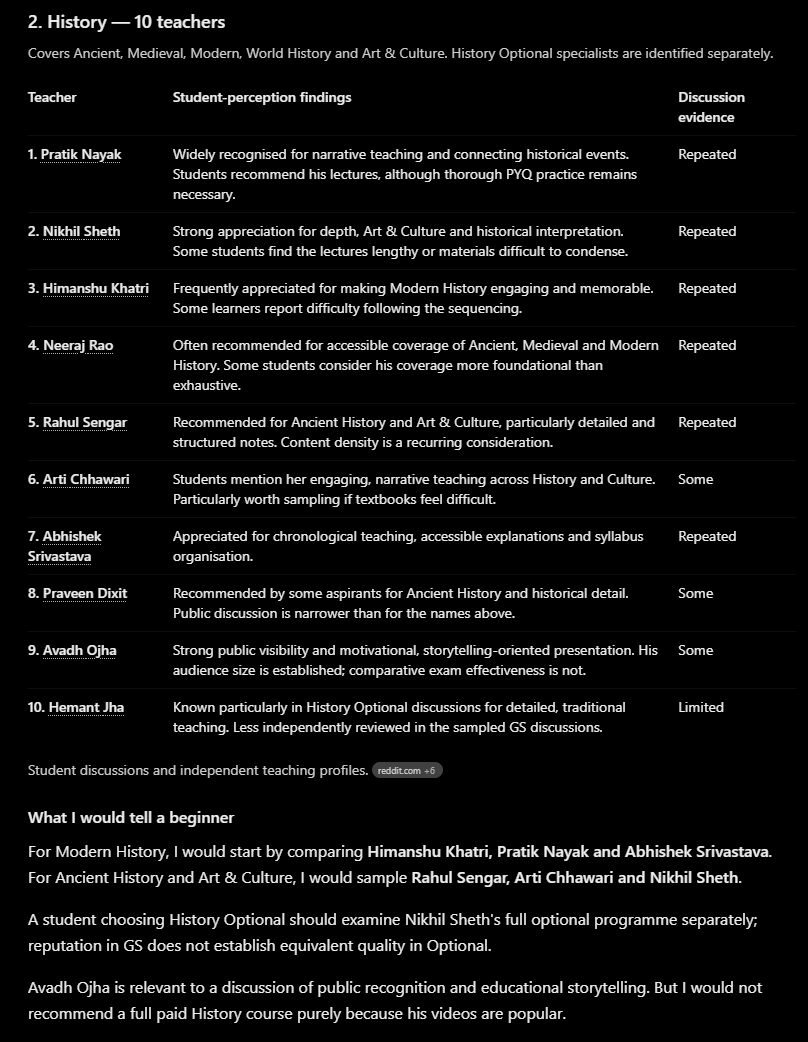
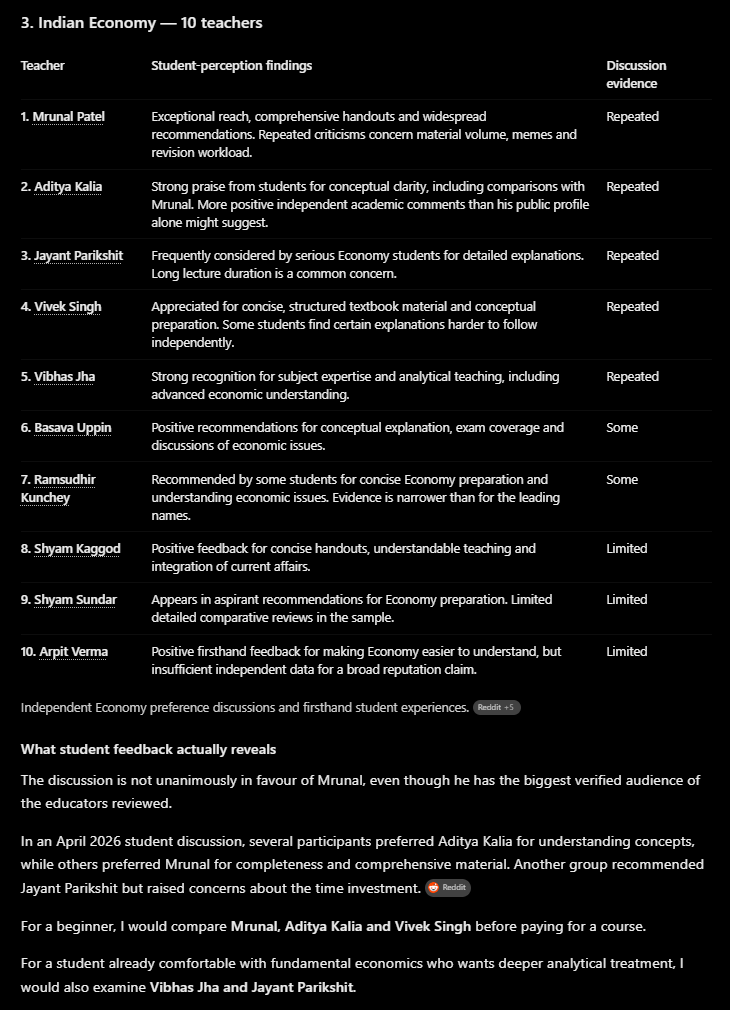
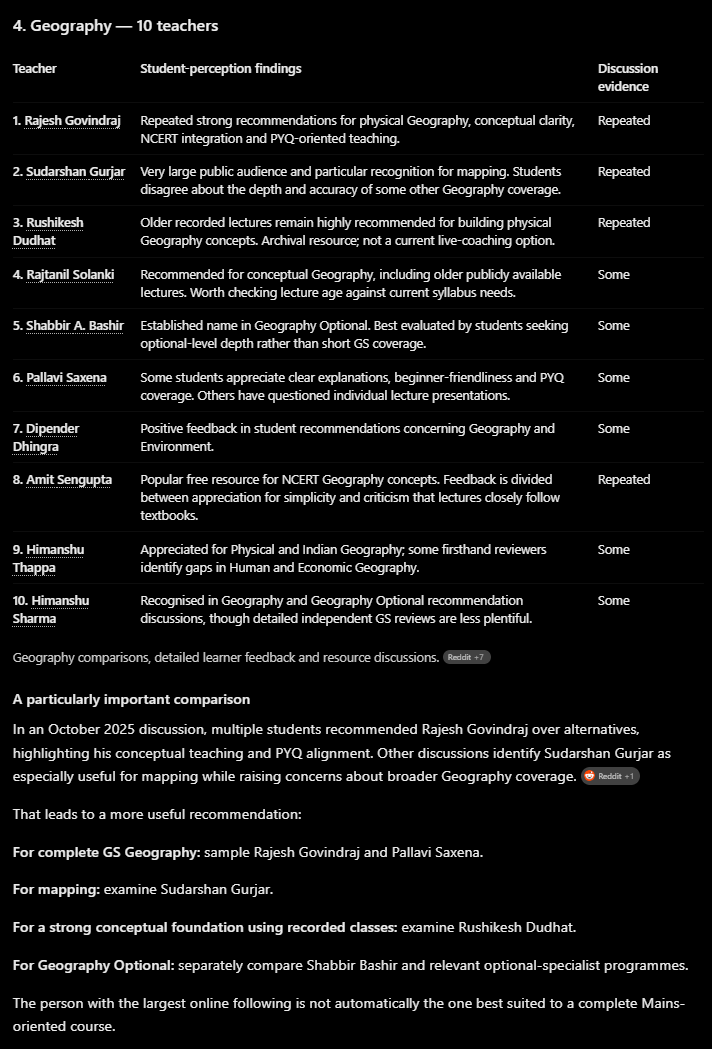
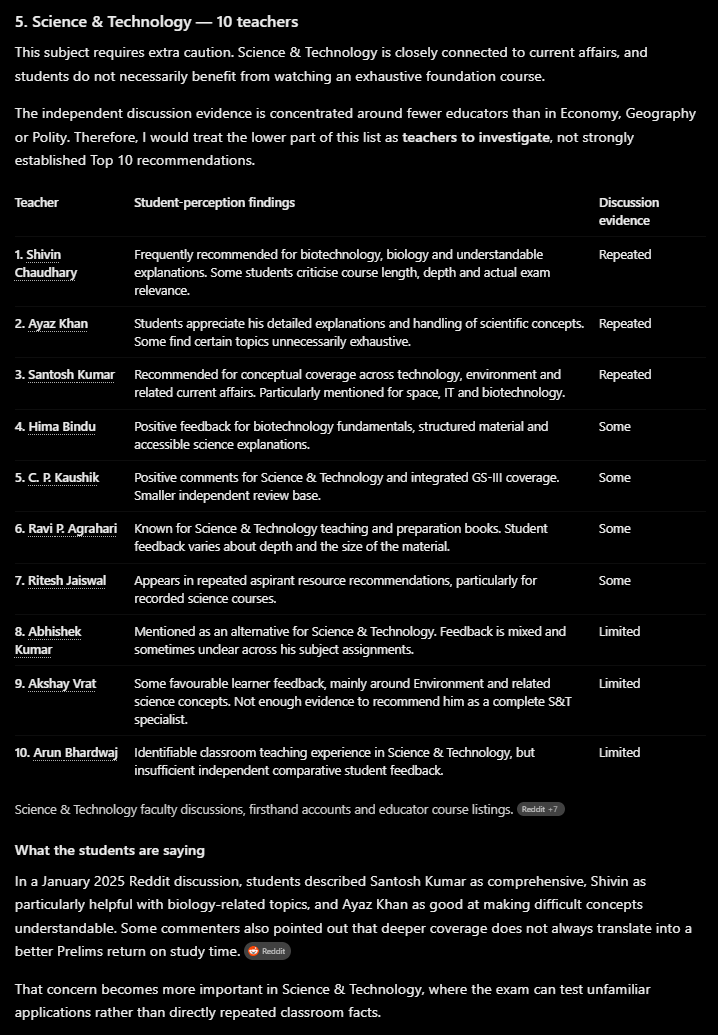
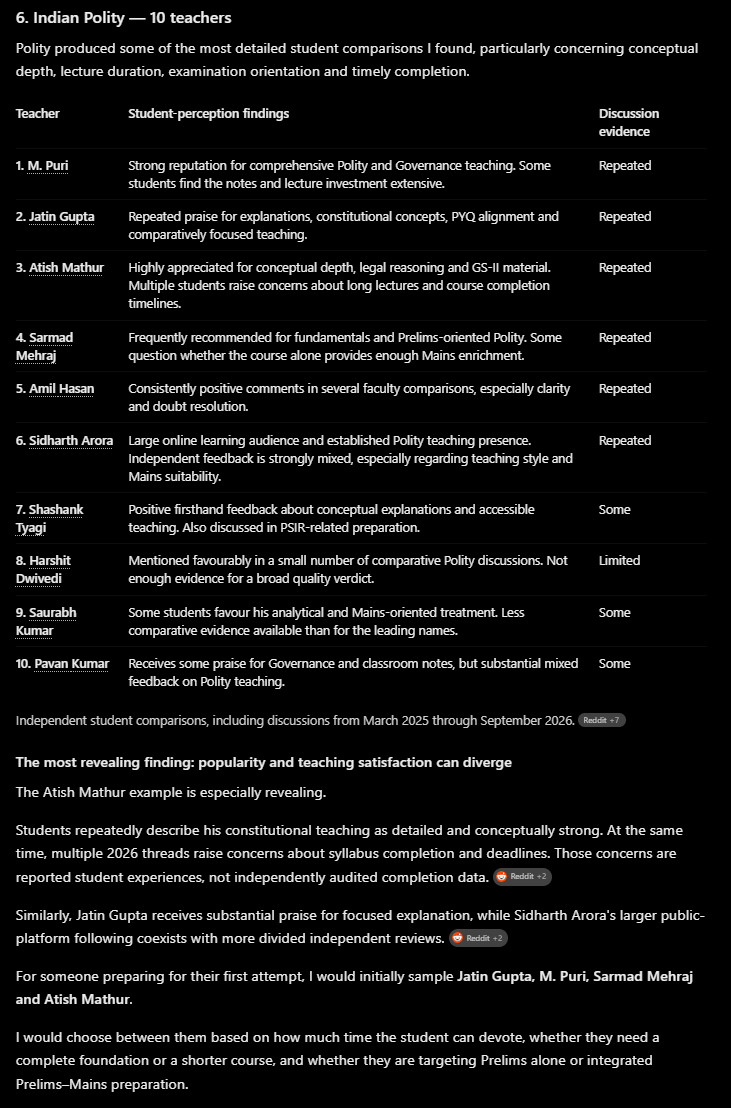
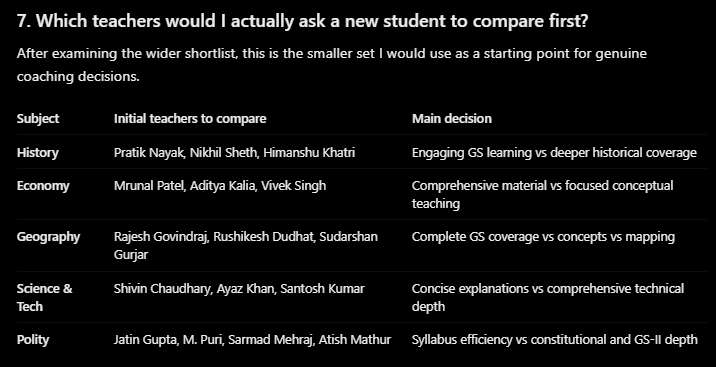

What changes, month by month
- Call every enquiry and record why each did not join
- Yuktiira App technical, security and UX audit
- Annual marketing plan and strategy roadmap
- CRM live: every lead called within one hour
- WhatsApp nurture flows
- Counselling team and scripts
- Academic and admissions leads appointed (within 15 days)
- Flagship Batch of 25 selected and on campus
- Daily free teaching on YouTube
- Podcast launched, first episodes with senior faculty
- Free demo classes and monthly campus-visit days
- Parent webinars
- Scholarship test announced
- EMI and early-bird offer for the CSE 2028 batch
- BriefUp ↔ Yuktiira App cross-linking
- Scholarship test held
- Conversions from re-engaged enquiries
- First monthly metrics report, shared openly
- Online ladder live: free BriefUp → paid online → hybrid → residential
Measured every month
Leads→Counselled→Campus visit / demo→Enrolled
Cost per enrolled studentDrop-outs after joining
Reaching every corner of Bharat
One residential hub at Bahadurgarh. Online for the tier 2 and tier 3 cities of every zone, opened phase by phase.
The next generation: every government school student from Class 8 to 12
Nearly 4 crore students in Classes 8 to 12 study in India's government schools, mostly in the tier 2 and tier 3 cities and villages we are targeting. Few of them have a guide to UPSC. Yuktiira goes to them school by school, gives each class its own path on the app, and turns the best of them into a community that keeps growing.
10.13 lakhgovernment schools, 68.9% of all schools in India
3.85 crorestudents in Classes 8 to 12 in government schools
53%of government Class 9 to 12 students are girls
58.6%of government schools have internet; 28.6% have a smart classroom
Two groups, two paths
Group AClasses 8, 9 and 10Foundation
2.80 crore students · in 3.65 lakh government schools that teach Class 8 and 1.21 lakh that teach Classes 9–10
Group BClasses 11 and 12Launchpad
1.05 crore students · in 70,857 government schools with Classes 11–12
The app, made for each class
Class 8Curiosity
How India is run, told as stories: the Constitution, your district collector, Panchayats. Reading habit, maps, 10 minutes of current affairs a day.
Class 9Foundations
NCERT History, Geography, Civics and Economics explained the UPSC way. A weekly quiz and the first newspaper-reading habit.
Class 10Boards + direction
Board-exam support that doubles as the UPSC base. Career clarity: what a civil servant does, which stream and subjects to pick.
Class 11Deep NCERTs
Polity, History, Geography and Economy in depth, essay and answer-writing basics, monthly current-affairs digests.
Class 12Launch
Boards and CUET, choosing the right graduation, the full UPSC syllabus map, CSAT aptitude and the first mock tests.
Every class also gets the Yuktiira daily habits: yoga, reading and a fixed study hour, tracked on the app and the projector.
How we reach them: school by school
01States
An MoU with each state's school education department and Samagra Shiksha opens the door to its government schools.
02Districts and blocks
A Yuktiira counsellor for about every 100 schools, zone by zone in the Targeting Bharat order: about 3,650 counsellors at full scale.
03Schools
A nodal teacher in each school as the "Yuktiira Mitra"; assembly talks, recorded sessions by senior faculty, and a free class-wise talent test.
04Students and parents
A parents' meeting after the test, then enrolment on the app; lessons run in the school's smart classroom where it has one.
School clubs, built like Tamil Nadu's superstar fan clubs
In Tamil Nadu a superstar's fans organised themselves into about 85,000 local clubs of around 25 active members each. That network ran welfare work for years and later became a political party's booth-level organisation. Yuktiira builds the same thing for education: one club in every government school.
1,20,819Yuktiira school clubs
25 active members
The model · Tamil Naduabout 85,000 fan clubs × 25 active members = 21,25,000 people
1,20,819(school clubs)
×25(active members)
30,20,475(students)
One club in each of the 1,20,819 government schools that teach Classes 9 and 10. That is about 30 lakh active members, close to the 38 lakh students the 10% plan brings in.
A club in every school
Students elect a president and a secretary from Classes 11–12; the club keeps about 25 active members.
An identity to belong to
A club name, badges and ID cards, a club board on the school wall. Members belong to something bigger than one school.
Something every week
A study circle every week, a quiz every month, live sessions with senior faculty screened together, and help drives from the social-impact desk.
A ladder to climb
School club, then block, district and state: club leaders become coordinators, and the best meet every year at Bahadurgarh.
A chain that never breaks
01Member
Every student who enrols joins a Yuktiira club in their school.
02Achiever
Top 10% in the monthly tests: live sessions with Yuktiira faculty.
03Scholar
Top 1%: fee waived and a summer camp at the Bahadurgarh campus.
04Mentor
Scholars in Classes 11–12 mentor Classes 8–10 in their own school, and bring in the next batch.
Next generationEach year's scholars recruit and coach the next, so the community keeps adding students.
From the school gate, and what 1 in 10 is worth
The route: from the school gate to the civil services
We do not wait for students at the college gate. A counsellor reaches every government school, the students join the app and form a club, and the best are guided all the way to university. Press Go at each step.
How a student from a government school comes to Yuktiira
Each step first says what happens; then the frame shows it. What is happening now is in colour, and what you have seen stays in grey.
If 1 in 10 comes forward
Group A · Classes 8–10
2.80 crore × 10% = 27.97 lakh students
₹2,797 Cra year
Group B · Classes 11–12
1.05 crore × 10% = 10.51 lakh students
₹1,051 Cra year
Each student pays ₹2,000 a month and stays 5 months on average, so ₹10,000 a student.
₹3,848 Crevery year from 38.48 lakh students
From "we talk" to "we do"
Every big institute talks about changing India's education. Yuktiira will show it, one person at a time. Whenever someone in India is reported, in a news story, a video or a letter, as struggling to keep studying, we step in. The help is small; the result is big; and the story of that one life reaches lakhs of others. That is how a new institution earns the trust the big players buy with advertising.
The help loop
01Spot
Every day the Impact Desk watches the news, viral videos and letters to us for someone stuck in their education.
02Verify
Within 48 hours a Yuktiira counsellor or partner centre nearby meets them, checks the facts and asks what would really help.
03Help
Small and specific, done fast: fees paid, books, a bicycle, free app access, a scholarship, a school library.
04Follow up
We go back after a month and after a year. Help that stops halfway is not help.
05Tell it
Only with their consent, in their words, on our YouTube and podcast. Lakhs of people see one life change.
Every story told brings the next person forward, and the loop starts again
How we run it
The Impact Desk
A small team that watches news, social media and messages to Yuktiira every day, and logs every case.
Boots on the ground
The counsellors and partner centres from the government-schools programme verify and deliver help in every district.
The Shiksha Sahyog fund
A fixed share of every app fee goes into a fund for this work, reported openly every quarter.
One story a week
52 stories a year on the Yuktiira YouTube channel and podcast, each followed up a year later.
The rules we keep
- Help first, story later. Help never depends on filming or publicity.
- Consent, always. From the person, and from parents for anyone under 18.
- Dignity, not pity. We show people as strong, never as helpless.
- Privacy. No home addresses or school names of children.
- Verify before acting. Every case is checked in person first.
- Honest numbers. What we spend and whom we helped, published as it is.
Small help, big results
The kind of moments we will answer. These are examples of the needs we will look for, not reports of help already given.
How this beats the big players
The big players
Advertising and discount sales
Celebrity faculty on billboards
Toppers' photos after the result
Talk about changing education
Yuktiira
Real help to real people, every week
Faculty who go to the student's door
Students supported long before any result
Proof, one life at a time
Trust is the stage where aspirants drop off. Every story of help is trust that no advertisement can buy.
Creating leaders
who are
Intellectually capable
Think clearly, read deeply and solve real problems with evidence and judgement.
Morally grounded
Hold to integrity and fairness, and act the same way when no one is watching.
Socially responsible
Put public service first and use their position to make life better for others.
Yuktiira IAS: three steps, from dream to officer
- 01Fix the gapEvery enquiry called, every reason known
- 02Prove itA flagship batch at Bahadurgarh, measured every month
- 03Take it to BharatPartner centres, school clubs and BriefUp in every zone
Let the journey shape the officer.